
Paver patios, driveways and walkways
Pavers make a hard surface that handles Arizona heat and soil movement better than a poured slab. Each unit can shift slightly without cracking, and a damaged or stained paver can be lifted out and replaced.
How long a paver surface lasts depends mostly on what is under it. We excavate, build and compact an ABC rock base, set the pavers on a bedding layer, restrain the edges and lock the joints with polymeric sand.
5-year workmanship warranty
Every paver installation we build is covered by our 5-year workmanship warranty. The Arizona Registrar of Contractors holds contractors responsible for their workmanship for 2 years. We stand behind ours for more than twice that.
That is on top of the manufacturer’s warranty on the material itself, which stays valid because we install on the base the manufacturer requires.
What we install
Patios
Dining and seating areas sized to the furniture and the number of people you expect to use them.
Driveways
A deeper base and thicker pavers that carry vehicle weight without rutting.
Walkways and side yards
Paths that connect the gate, the patio and the rest of the yard.
Pool decks
Decking around a pool, with borders and coping transitions planned in.
The base under your pavers: ABC, not 1/4-inch minus
Pavers are only the top two or three inches of a patio or driveway. What holds them level for years is the compacted rock base underneath, and the type of rock used for it matters.
We build every paver base with ABC, or aggregate base course. Paver manufacturers require a properly compacted aggregate base, and installing to their requirements is what keeps the manufacturer's warranty on your pavers valid. Some installers use 1/4-inch minus because it costs less and is quicker to spread. We do not.
| ABC base rock | 1/4-inch minus | |
|---|---|---|
| What it is | Crushed rock in a mix of sizes, from about 3/4 inch down to fine particles. | Rock screened to 1/4 inch and smaller. Mostly small particles and fines. |
| How it compacts | The angular pieces lock against each other and the fines fill the gaps, so it compacts into a dense, solid layer. | With no larger stone to lock together, it packs down less firmly and can loosen again. |
| Drainage | The larger stone leaves paths for water to move through and out of the base. | Fine material holds water. It stays wet longer and softens when saturated. |
| Over time | Stays put under weight and through monsoon seasons, keeping the pavers above it level. | More likely to settle, wash or shift, which shows up as dips and uneven pavers. |
| Manufacturer warranty | Meets the base the paver manufacturer requires. | Can leave you without the manufacturer's warranty. |
We do not cut corners on the part you cannot see. ABC is the correct way to build a paver base, so it is the only way we build one.
Materials and design
- Material
- Concrete pavers come in the widest range of colors, shapes and sizes. Travertine is a natural stone alternative with its own look and feel.
- Pattern and border
- The laying pattern affects both appearance and strength. Herringbone interlocks best under vehicles. A contrasting border frames the surface and tidies the edges.
- Color and heat
- Lighter pavers stay cooler underfoot in summer. Darker colors hide stains better and get hotter in direct sun.
Built for Arizona
- Desert soils and the hard caliche layer under much of the Valley make base preparation the most important step. A well-compacted base keeps pavers from settling.
- Pavers tolerate ground movement and temperature swings that crack large concrete slabs.
- A paved surface is pitched slightly so monsoon rain runs off and away from the house.
How the installation goes
Installed by Horizon’s own crew. We do not subcontract our landscape installations.
Layout
We mark the area and confirm the shape, levels and drainage direction with you.
Excavation and base
We dig to the depth the use requires, then place ABC base rock and compact it in layers.
Laying
Pavers are set on a screeded bedding layer in the chosen pattern, with cuts made to fit the edges.
Edging and joints
Edge restraint holds the field in place. Polymeric sand is swept into the joints and set.
Cleanup
We clean the surface and the work area and walk it with you.
Our work
Completed Horizon projects that include this work, each with its own page.
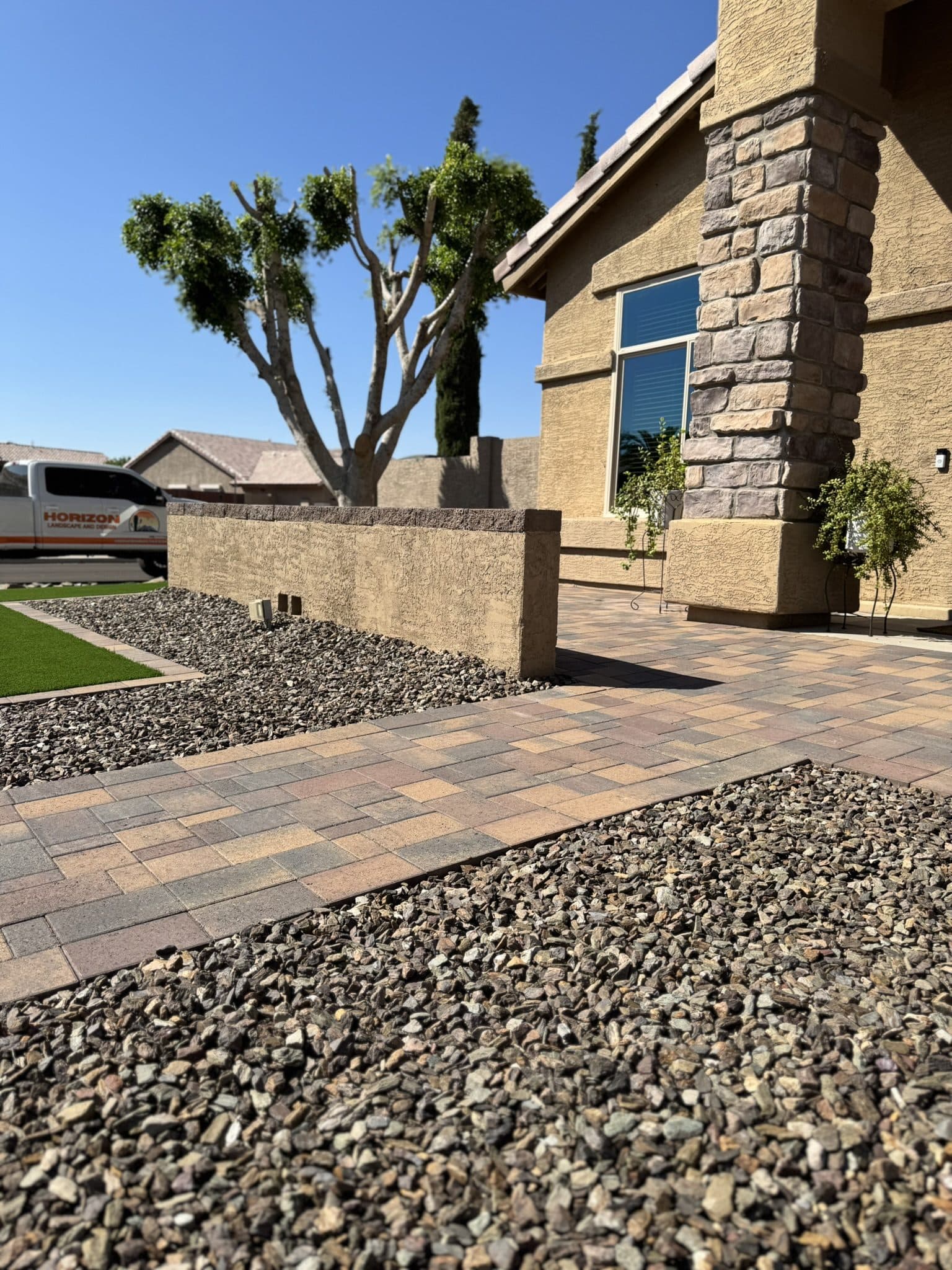
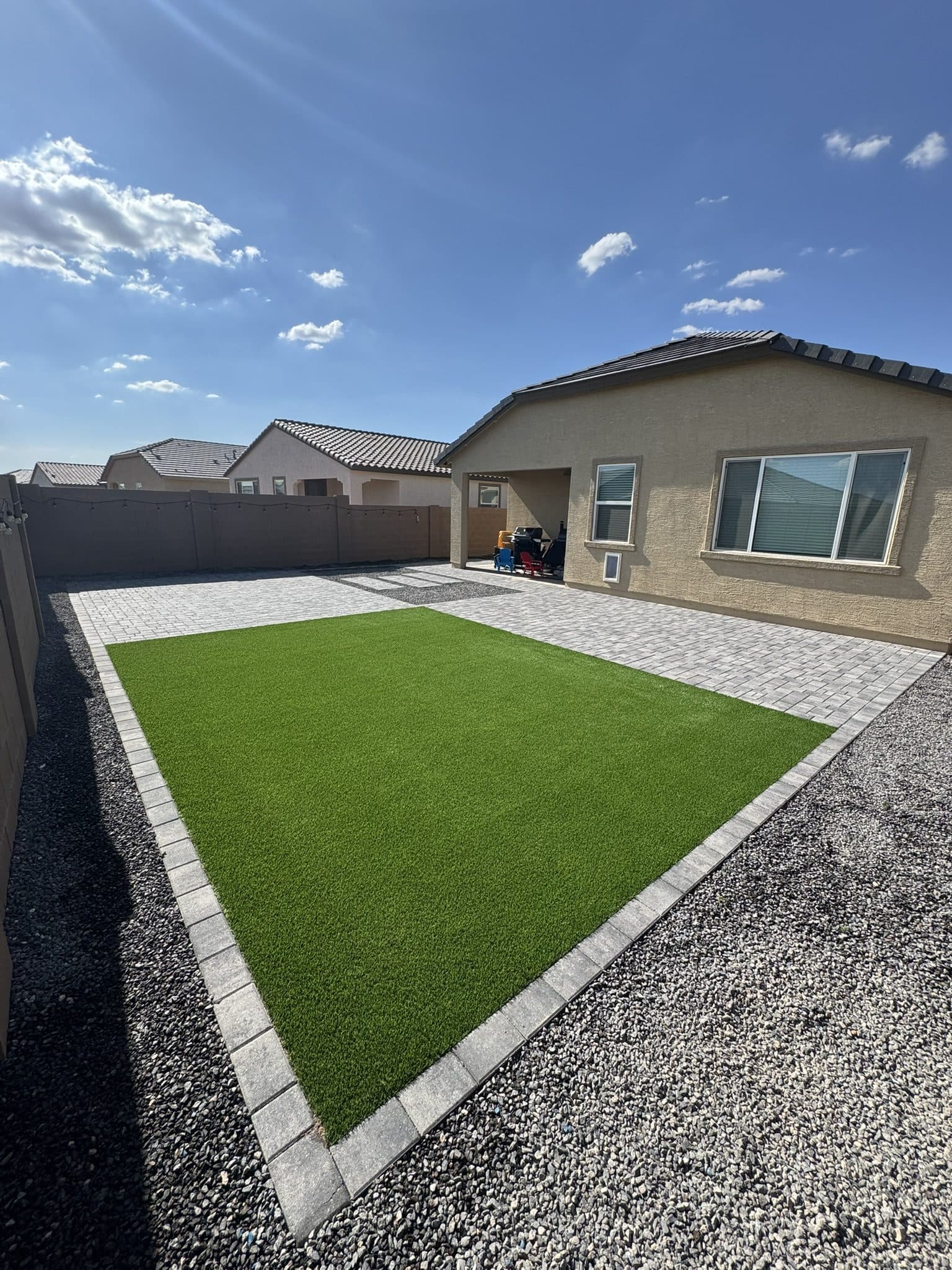
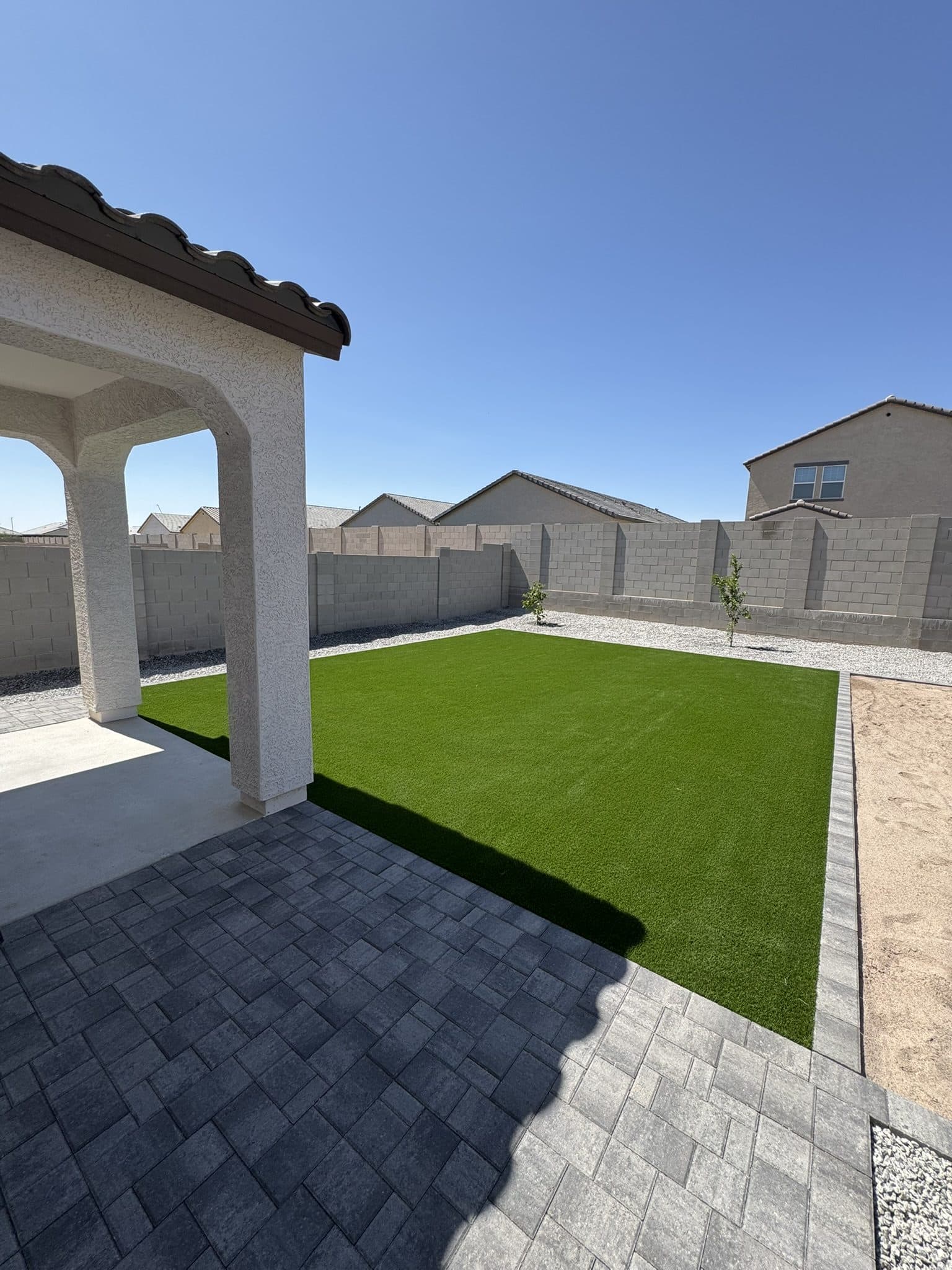
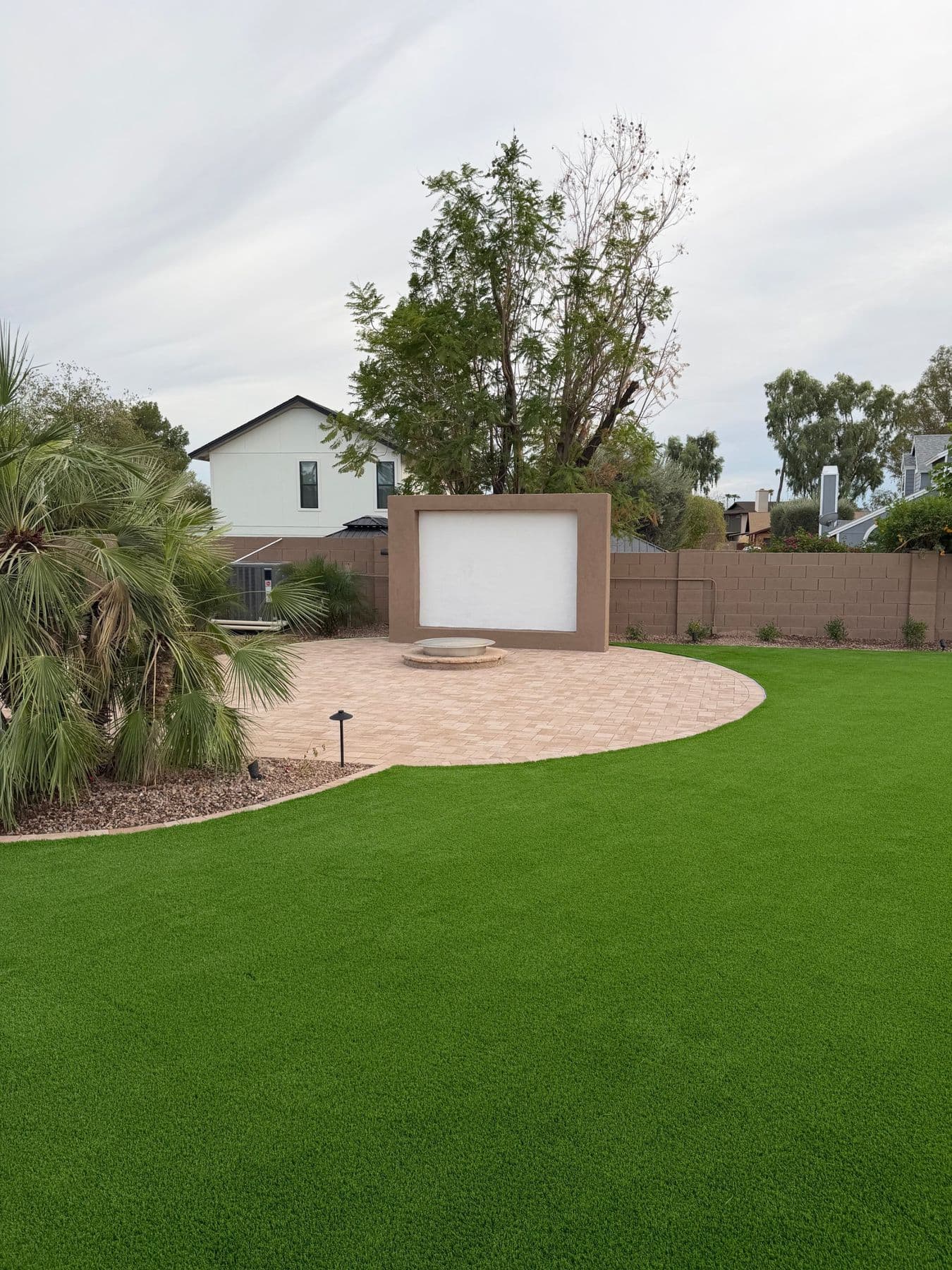
Real Horizon projects.
Explore Our WorkCommon questions
Are pavers better than concrete?
They do different jobs. A poured slab costs less up front but tends to crack as the ground moves, and a crack cannot be hidden. Pavers flex at the joints and can be repaired piece by piece.
Will weeds grow between the pavers?
Polymeric sand hardens in the joints and resists weeds and ants far better than loose sand. Over the years, seeds can still settle on top and may need occasional attention.
Can you pave over my existing concrete?
Sometimes, if the slab is sound and the added height works with doors and drainage. In many cases removing the concrete and building a proper base is the better long-term choice. We look at it during the site visit.
Related services
Travertine Installation
Natural stone pavers for patios, walkways and pool decks.
Complete Backyard Remodels
One plan and one crew for the whole yard: grading, hardscape, turf, planting, lighting and shade structures.
Pergola Installation
Aluminum pergolas on steel posts set in concrete, with a 25-year warranty. Attached, freestanding or cantilever.
Outdoor Kitchen Installation
Built-in grill islands, counters and bar seating, planned around gas, electrical and how you cook.
Serving Scottsdale, Phoenix, Paradise Valley, Gilbert, Chandler, Mesa, Queen Creek and the rest of the Phoenix Valley.
Get a free estimate
Tell us about your paver project and we will get back to you to arrange a visit.
- Call
- (602) 380-7146
- Hours
- Monday to Friday: 7:00am to 5:00pmSaturday: 8:00am to 3:00pmSunday: Closed
- License
- Arizona ROC 357677