
Travertine paver installation
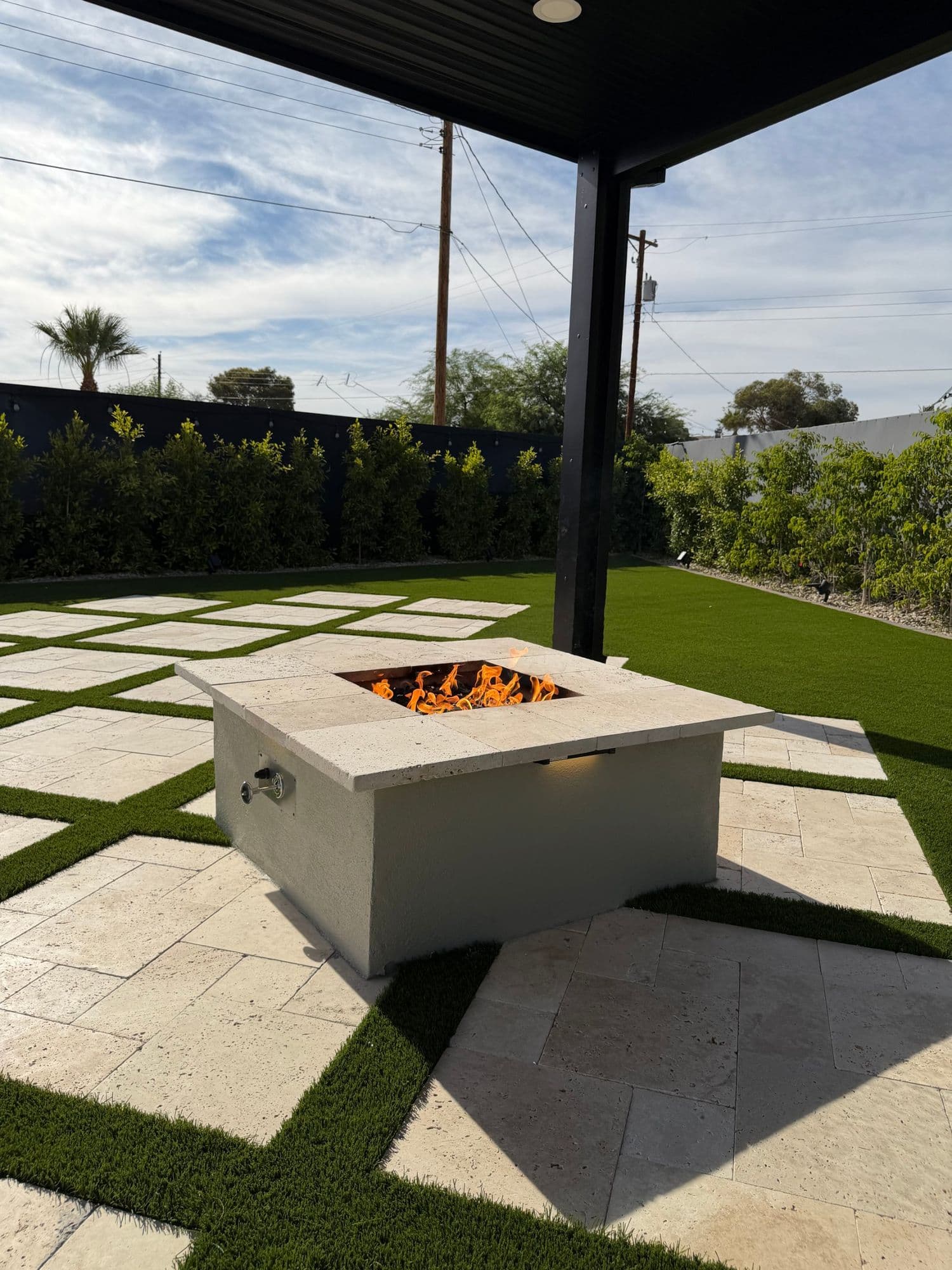
Travertine is a natural stone with soft, varied color and a surface that stays comfortable under bare feet. That makes it one of the most popular choices for patios and pool decks in Arizona.
We install travertine pavers the same way as any paver surface that is meant to last: on an excavated and compacted ABC rock base, with restrained edges and filled joints.
5-year workmanship warranty
Every travertine installation we build is covered by our 5-year workmanship warranty. The Arizona Registrar of Contractors holds contractors responsible for their workmanship for 2 years. We stand behind ours for more than twice that.
That is on top of the manufacturer’s warranty on the material itself, which stays valid because we install on the base the manufacturer requires.
What we install
Pool decks
Decking and coping around a pool, where a cooler, slip-resistant surface matters most.
Patios
Dining and seating areas with the look of natural stone.
Walkways and entries
Front paths and courtyards that set the tone for the house.
Patterns
A multi-size French pattern for a classic look, or a single size laid in a simple grid for a modern one.
What goes under travertine: ABC base rock
Natural stone is unforgiving of a poor base. If the ground under travertine settles, pieces rock, lips appear at the joints and water sits where it should run off.
We set travertine on a compacted base of ABC, or aggregate base course. Travertine suppliers require a proper aggregate base, and building to that requirement keeps the manufacturer's warranty on the stone in place. We do not substitute 1/4-inch minus, which some installers use to save time and money.
| ABC base rock | 1/4-inch minus | |
|---|---|---|
| What it is | Crushed rock in a mix of sizes, from about 3/4 inch down to fine particles. | Rock screened to 1/4 inch and smaller. Mostly small particles and fines. |
| How it compacts | The angular pieces lock against each other and the fines fill the gaps, so it compacts into a dense, solid layer. | With no larger stone to lock together, it packs down less firmly and can loosen again. |
| Drainage | The larger stone leaves paths for water to move through and out of the base. | Fine material holds water. It stays wet longer and softens when saturated. |
| Over time | Stays put under weight and through monsoon seasons, keeping the stone above it level. | More likely to settle, wash or shift, which shows up as dips and uneven stone. |
| Manufacturer warranty | Meets the base the travertine manufacturer requires. | Can leave you without the manufacturer's warranty. |
This is the correct way to install travertine, and we do not cut corners on it. Around a pool, where the deck is wet every day, the base matters even more.
Materials and design
- Color
- Travertine comes in ivory, beige, walnut, silver and blended tones. Each piece varies, which is part of its appeal.
- Finish
- A tumbled finish has softened edges and good grip. It is the usual choice outdoors and around water.
- Sealing
- Travertine is porous. Sealing helps resist stains and makes it easier to clean, and is reapplied from time to time.
Built for Arizona
- Light-colored travertine stays noticeably cooler in the sun than concrete or dark pavers.
- The textured surface of tumbled travertine gives grip when wet, which suits pool surrounds.
- Like other pavers, travertine tolerates the ground movement that cracks poured concrete.
How the installation goes
Installed by Horizon’s own crew. We do not subcontract our landscape installations.
Layout
We confirm the area, pattern, levels and drainage.
Excavation and base
The area is dug out, then ABC base rock is placed and compacted in layers.
Laying
Stone is laid in the chosen pattern, blending pieces so color variation is spread evenly.
Edges and joints
Edges are restrained and joints are filled. Sealing can be applied once the surface is clean and dry.
Our work
Completed Horizon projects that include this work, each with its own page.
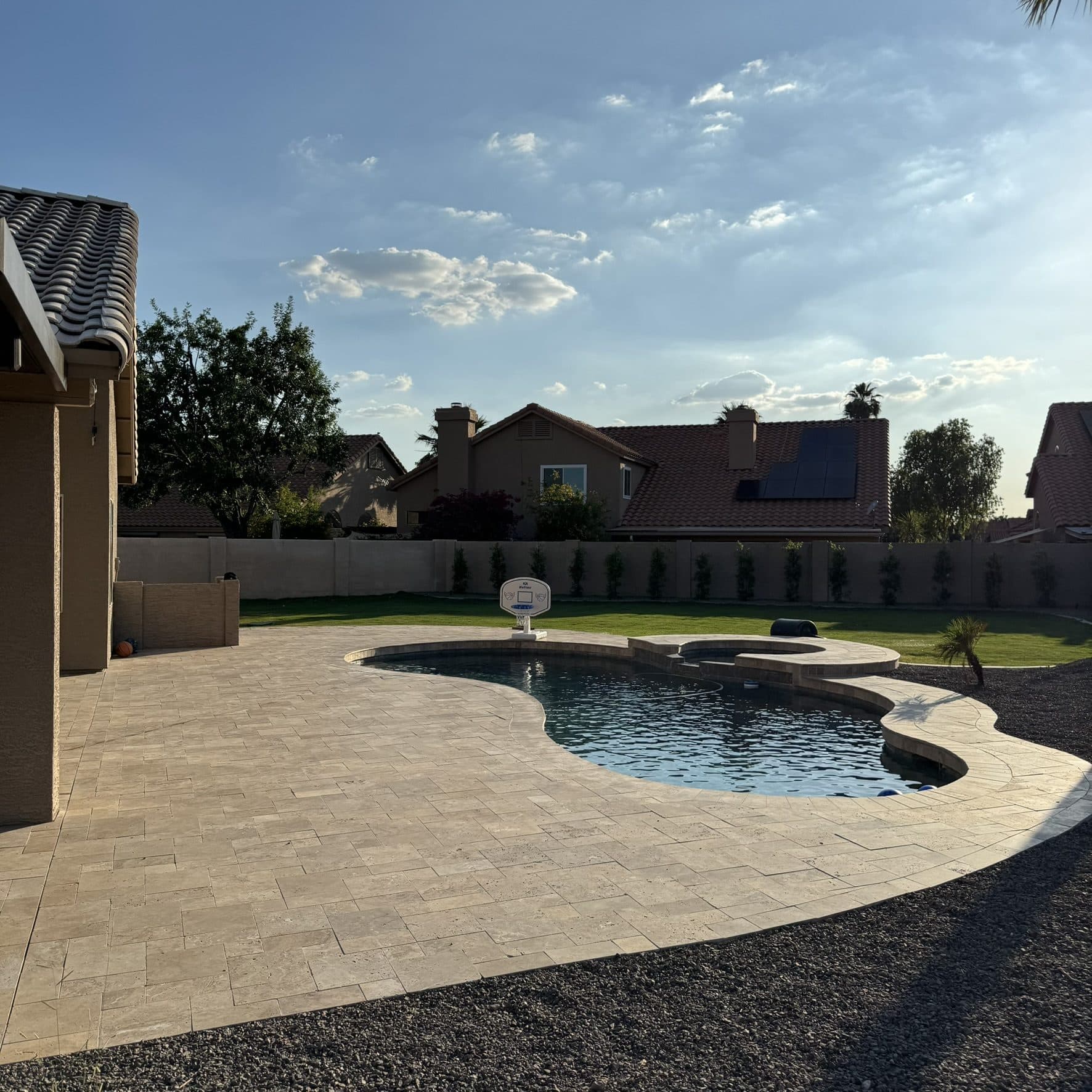
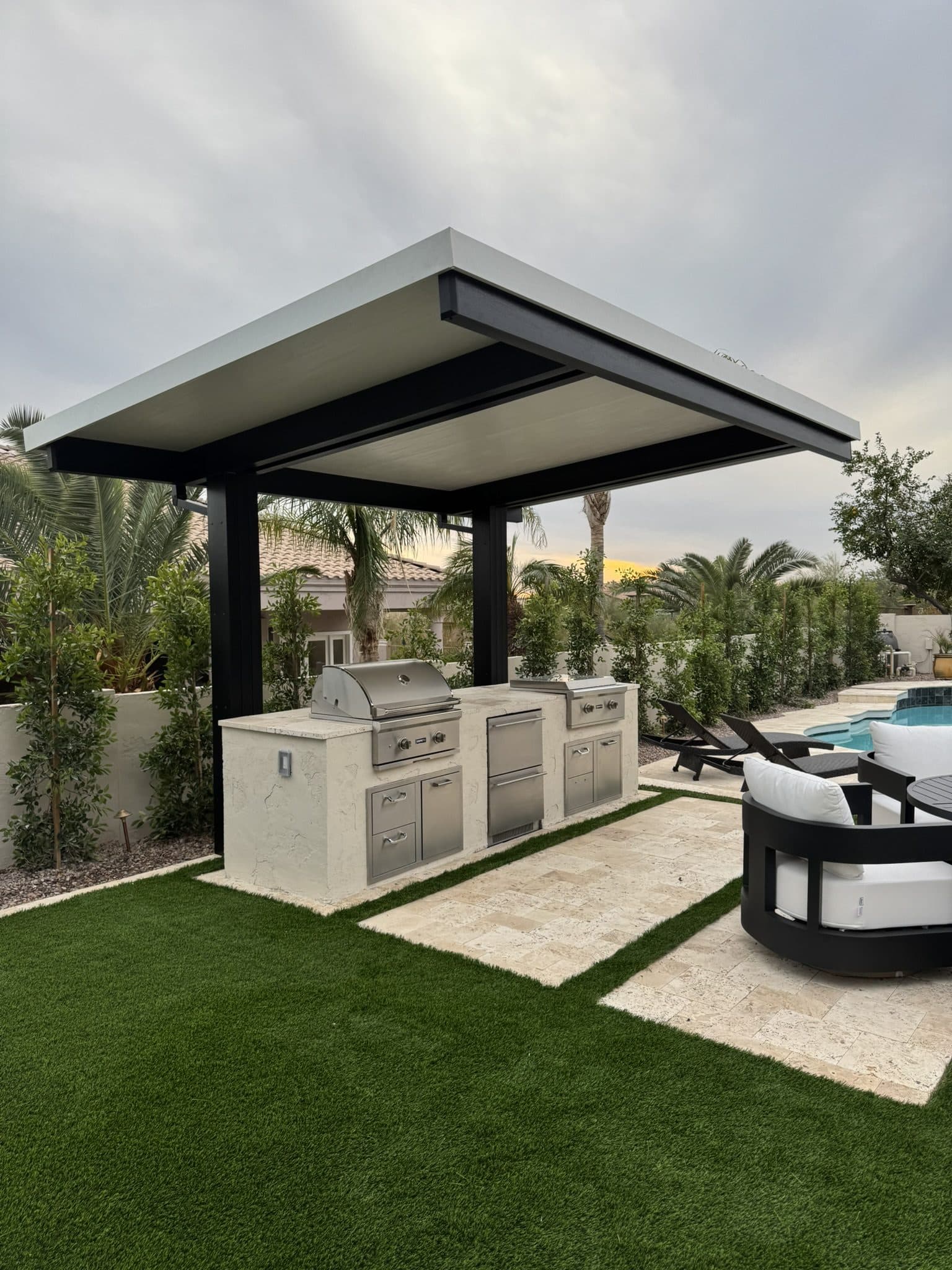
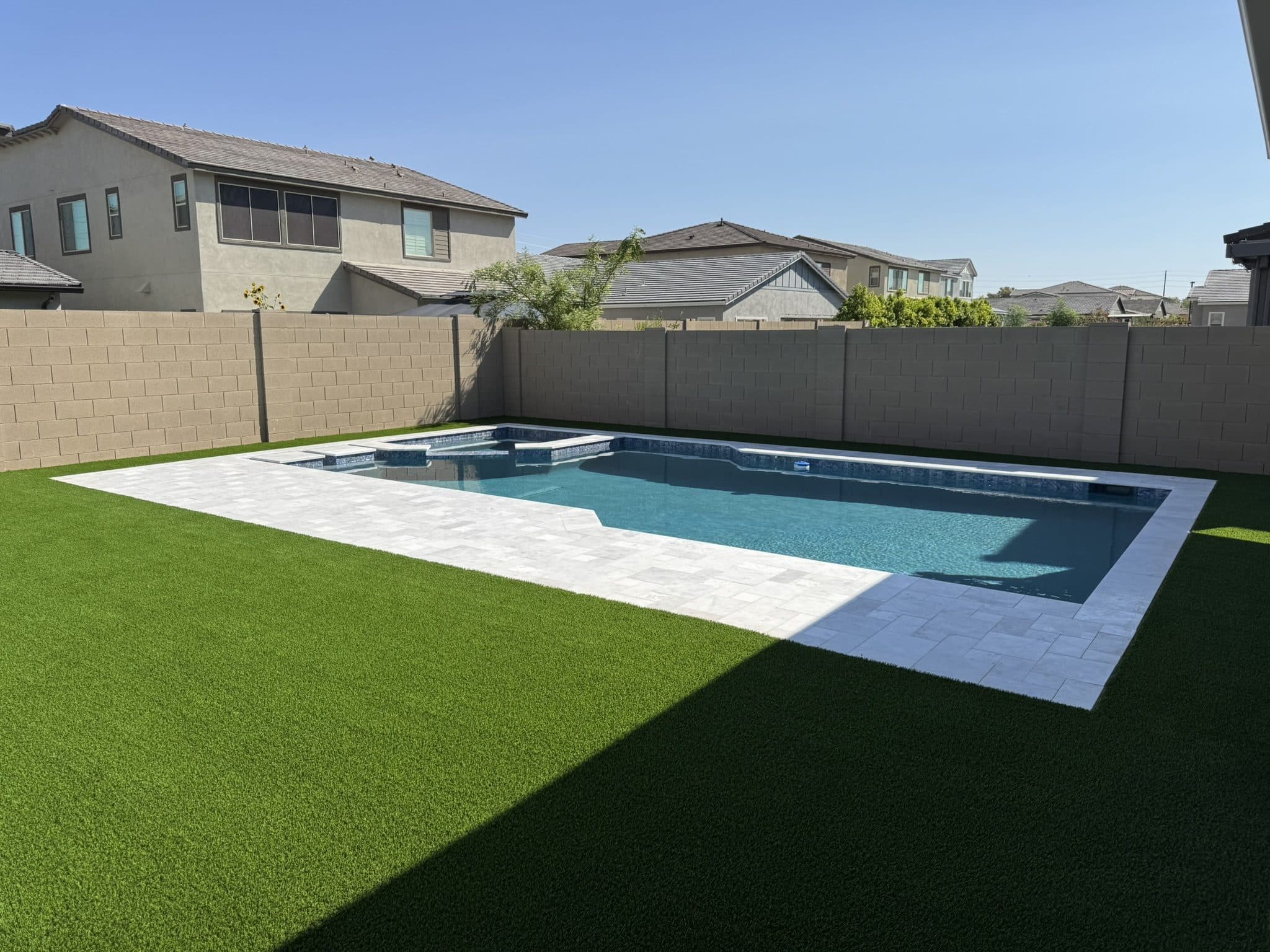
Real Horizon projects.
Explore Our WorkCommon questions
Is travertine slippery around a pool?
Tumbled travertine has a textured, porous surface that gives good grip when wet. Polished travertine is an indoor finish and is not used on pool decks.
Does travertine need to be sealed?
It is recommended. Sealer reduces staining from leaves, food and pool chemicals and is renewed periodically.
How is travertine different from concrete pavers?
Travertine is quarried stone with natural variation and a cooler surface. Concrete pavers are manufactured, more uniform, and come in more shapes and colors.
Related services
Paver Installation
Patios, driveways, walkways and pool decks on an excavated, compacted base with edge restraint and polymeric sand.
Complete Backyard Remodels
One plan and one crew for the whole yard: grading, hardscape, turf, planting, lighting and shade structures.
Pergola Installation
Aluminum pergolas on steel posts set in concrete, with a 25-year warranty. Attached, freestanding or cantilever.
Outdoor Lighting Installation
Path, accent and patio lighting that makes the yard usable after dark.
Serving Scottsdale, Phoenix, Paradise Valley, Gilbert, Chandler, Mesa, Queen Creek and the rest of the Phoenix Valley.
Get a free estimate
Tell us about your travertine project and we will get back to you to arrange a visit.
- Call
- (602) 380-7146
- Hours
- Monday to Friday: 7:00am to 5:00pmSaturday: 8:00am to 3:00pmSunday: Closed
- License
- Arizona ROC 357677